Using a generated command (virtual or physical machine)
The following feature is in beta.
A tailored command for installing a poller on a virtual or physical machine can be generated from the central server interface.
Prerequisites
- The machine on which you will install the poller must fulfill the poller installation prerequisites.
- You must have a poller-type authentication token (Cloud platforms have a default one, called poller-default).
Step 1: generate the installation command
-
In the interface of the central server, click the Pollers area at the top left. Then, click on Create new poller.
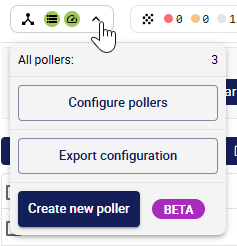
-
Fill in the form with your poller's information:
- Poller name: a unique name for this poller. It will appear in the list of pollers.
- Poller address: the address of the host machine where you are going to install the poller.
The Poller address does not affect connectivity: Gorgone uses PullWSS, so the poller always initiates the connection to the central server, not the other way around.
-
Select VM or physical as the poller's environment.
-
Select your authentication token.
-
In the Generate installation command section, click the button and wait for the command to be generated.
-
Copy the command using the button at the top right of the code block and execute it on your host machine.
-
Click Export configuration. The poller appears in the list of pollers.
Advanced deployment scenario: using a private repository
If you cannot connect to the Centreon public repository, you can disable automatic installation from this repository and manage package installation in another way.
-
Prepare the OS so that it can find the necessary packages using another channel. For your information, the necessary repositories can be found in the Centreon OnPrem documentation.
-
Follow the procedure above, but before running the installation command that you copied from the interface, edit it and add the
--private-repooption after theinstallcommand.